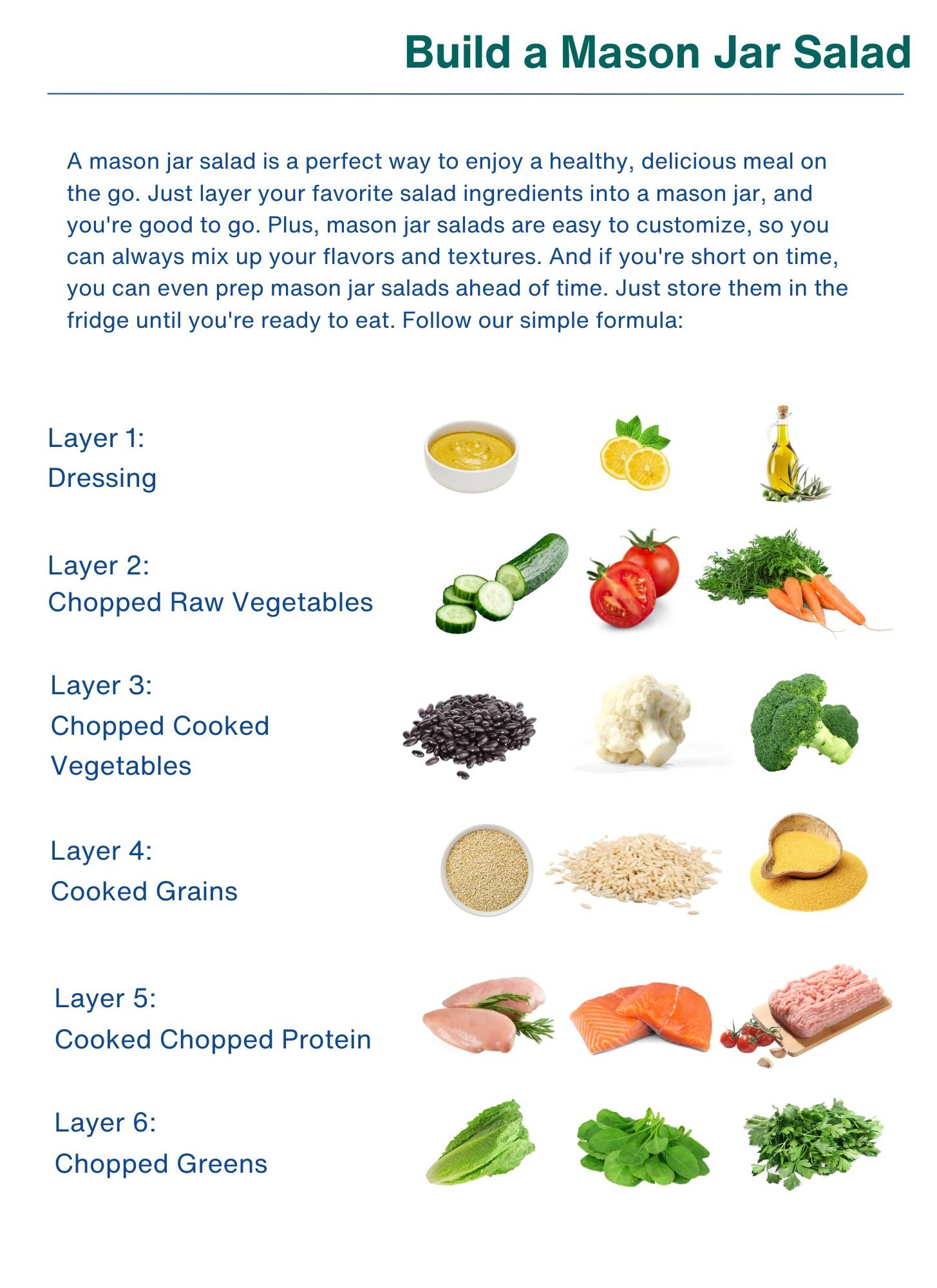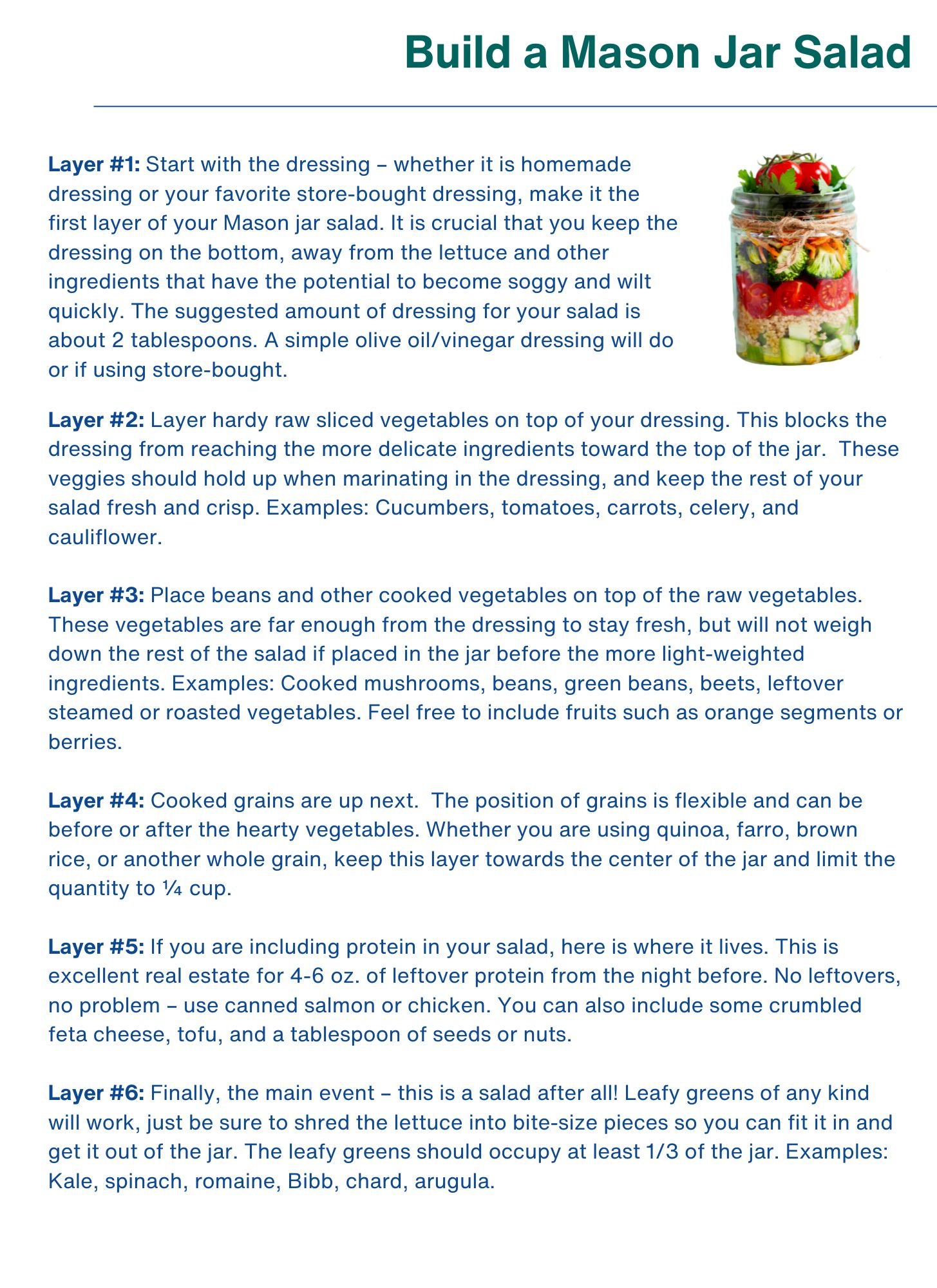
The Mason Jar Salad Formula
Layer 1: Dressing
Start with the dressing at the very bottom of the jar. Keeping it away from delicate ingredients prevents sogginess and wilting. Use about 2 tablespoons of dressing per jar. A simple olive oil and vinegar dressing works well, or use your favorite store-bought option.
Layer 2: Chopped Raw Vegetables
Add hardy raw vegetables directly on top of the dressing. These vegetables act as a barrier between the dressing and more delicate ingredients while absorbing flavor without losing texture.
Examples: Cucumbers, tomatoes, carrots, celery, cauliflower.
Layer 3: Chopped Cooked Vegetables (and Beans or Fruit)
Next, layer cooked vegetables or beans. These ingredients stay fresh when positioned away from the dressing and add bulk and nutrients to your salad. Fruits can also be included here for sweetness.
Examples: Mushrooms, beans, green beans, beets, roasted or steamed vegetables, orange segments, berries.
Layer 4: Cooked Grains
Grains add fiber and energy. Keep this layer near the center of the jar and limit portions to about ¼ cup.
Examples: Quinoa, farro, brown rice, barley.
Layer 5: Cooked, Chopped Protein
This layer provides staying power and balance. Use 4–6 ounces of protein, such as leftovers from dinner or convenient canned options.
Examples: Chicken, salmon, tofu, canned beans, crumbled feta, nuts, or seeds.
Layer 6: Chopped Greens
Finish with leafy greens at the top. These should take up at least ⅓ of the jar. Chop greens into bite-size pieces so they’re easy to remove and toss when ready to eat.
Examples: Kale, spinach, romaine, Bibb lettuce, chard, arugula.
How to Eat
When you’re ready to enjoy your salad, simply shake the jar to distribute the dressing, or pour everything into a bowl and toss. Fresh, balanced, and ready in minutes.